
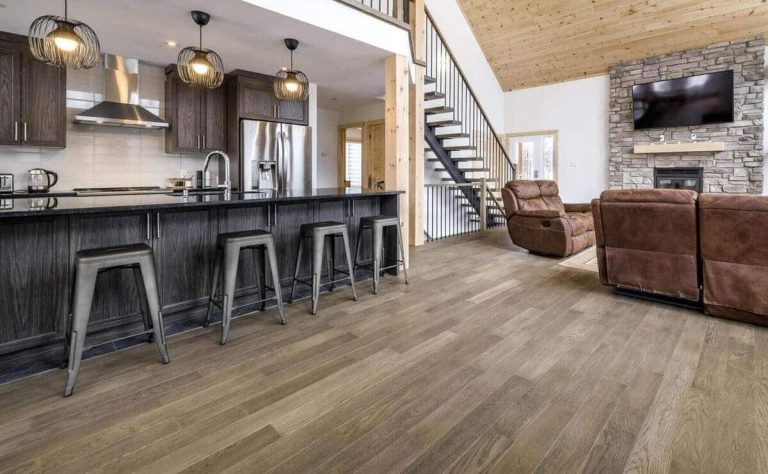
So, is it worth refinishing hardwood floors before selling? Sometimes, yes. But not every worn floor needs a full reset before the house goes live.
In North America, professional hardwood floor refinishing often lands around $3–$8 per sq. ft. in many common residential projects. For a deeper breakdown of price factors, market differences, and what can push the cost higher, see this guide to hardwood floor refinishing cost. Canadian pricing can vary by city and project condition too, especially when repairs, stairs, stain changes, dust control, or tight timelines are involved.
That is why the decision needs some restraint. If you are refinishing 800 sq. ft., even a normal range can put the job somewhere around $2,400–$6,400 USD/CAD, before repairs, stairs, stain changes, furniture moving, or tight-schedule costs.
The upside is real, though. The NAR/NARI 2022 Remodeling Impact Report estimated hardwood floor refinishing at 147% cost recovery, based on a $3,400 remodeler cost estimate and $5,000 estimated recovered value from REALTORS®. But even that report showed only 22% of REALTORS® recommended refinishing before selling, which tells you something important: the project can perform well, but it is not automatically needed for every listing.
From what we see on real jobs, refinishing pays off when it changes buyer perception in the rooms that matter. It does not pay off when the floor already looks clean, consistent, and appropriate for the home.
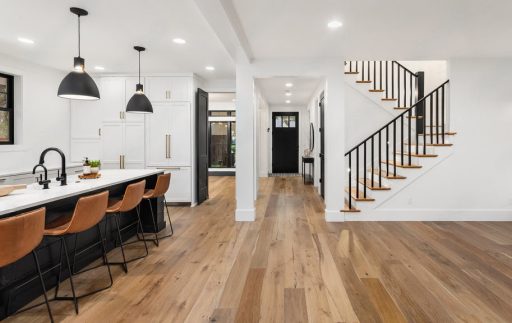
What Buyers Actually Notice (And What They Don’t)
Buyers do not inspect hardwood like flooring contractors do. They usually do not care about coating thickness, sanding history, or finish chemistry during a showing. They care about the feeling of the room.
Photos are the first filter. A floor with even colour and clean reflection can make a living room look brighter and better maintained. A floor with dull traffic lanes, glare, cloudy finish, grey wear, or heavy scratches can pull attention away from the room itself.
And yes, small-looking wear can become a bigger deal in listing photos. Window light catches scratches. Overhead lights show uneven sheen. A dark hallway traffic lane can look worse on camera than it feels in person. If the issue is mainly visible sanding texture or swirl marks, this guide on sanding marks on hardwood floor explains why those marks show so strongly in certain light.
But the opposite happens too. I have seen floors that looked tired up close but sold fine because they presented clean and consistent from normal viewing distance. A few scratches under a table? Usually not the issue. A worn path from the entry through the living room? That can change the first impression.
The main buyer-visible issues are:
| Buyer-Visible Issue | Why It Matters Before Selling | Usually Worth Fixing? |
|---|---|---|
| Dull traffic lanes | Makes the home feel more worn than it may be | Often yes, if in main rooms |
| Light surface scratches | Can show in photos but may not hurt the sale | Sometimes |
| Exposed raw wood | Reads as deferred maintenance | Often yes |
| Grey or black stains | Suggests deeper wear, water, or pet damage | Depends on severity |
| Uneven sheen | Looks patchy or poorly maintained | Often yes |
| Minor patina | Can feel normal in an older home | Often no |
That is the useful boundary. Buyers react more to “consistent” than “perfect.” A floor does not need to look brand new. It needs to avoid looking like an immediate repair bill.
Recoat vs Full Refinish: Which Makes Sense Before Selling?
Before selling, recoat vs full refinish should be treated as a decision, not a technical project plan. The goal is not to do the most work possible. The goal is to spend only where the floor’s presentation actually changes.
A recoat can make sense when the floor is structurally fine, the wood is not broadly exposed, and the issue is mostly tired finish. In North American markets, a recoat or buff-and-coat type service may come in far lower than full sanding, sometimes around $2–$4 per sq. ft. depending on the market, finish system, layout, and surface condition.
That can be the smarter pre-sale move. If the floor only needs to look cleaner, more even, and less dull, learning how to recoat hardwood floors may make more sense than planning a full sanding job.
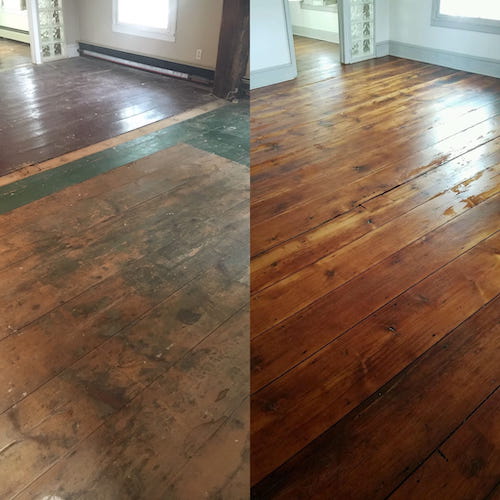
A full refinish makes more sense when the problem is deeper. Exposed wood, grey wear, deep scratches, old stain colour, strong traffic lanes, or patchy finish failure may need a full reset. That is where hardwood floor refinishing can change buyer perception enough to matter.
But here’s where engineered floors change the answer fast. The NWFA’s engineered wood flooring refinishable guidance uses minimum wear layer benchmarks such as 2.5 mm / 3⁄32 in. for factory-finished smooth engineered flooring, and notes that floors below 3⁄32 in. of wear thickness generally should not be sanded.
Decision Factor When Recoat Fits When Full Refinish Fits Key Limitation
General dullness Finish looks tired, but wood is not exposed Dullness comes with grey wear or deep damage Recoat depends on adhesion
| Decision Factor | When Recoat Fits | When Full Refinish Fits | Key Limitation |
|---|---|---|---|
| General dullness | Finish looks tired, but wood is not exposed | Dullness comes with grey wear or deep damage | Recoat depends on adhesion |
| Light scratches | Scratches sit mostly in the finish | Scratches cut into the wood | Deep marks may still show |
| Traffic lanes | Lanes are dull but protected | Lanes are worn through or discoloured | Heavy wear may need sanding |
| Colour or tone | Existing colour is acceptable | Colour needs a more complete reset | Stain results can vary |
| Engineered floor | Wear layer supports light prep only | Wear layer is thick enough for sanding | Thin veneer may rule out sanding |
| Tight timeline | Faster refresh may fit better | Full reset needs more time | Rushing can hurt results |
The simplest rule: pick the least invasive option that solves the buyer-visible problem.
When Refinishing Is a Smart Move (High ROI Scenarios)
Refinishing is usually a smart move when the floors are actively hurting the sale. Not just “they could look better.” More like buyers are likely to see them as a repair item.
This matters most when hardwood runs through the entry, living room, dining room, kitchen, main hallway, or primary bedroom. Those areas shape the showing. If those floors look dull, scratched, grey, uneven, or neglected, refinishing can change the way the whole home reads.
A full refinish can also make sense when the rest of the home is already clean and prepared. Fresh paint, clean trim, staged furniture, updated lighting – all of that can make worn floors stand out more. In that situation, the floor becomes the thing holding the room back.
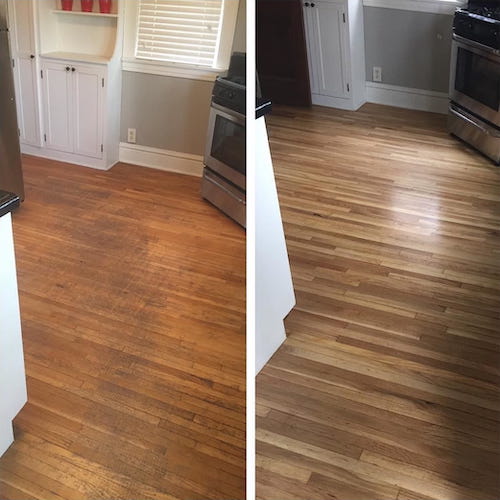
This is where refinished hardwood floors before and after examples can be useful. The value is not only in the floor itself. It is in the way the floor changes the room’s first impression.
The numbers can support the decision, but they should not drive it alone. Yes, NAR/NARI reported 147% cost recovery for hardwood floor refinishing in 2022. But in real listings, that only helps if the work removes a visible objection. A seller spending $4,000 on floors that already looked fine may not feel the same benefit as a seller spending $4,000 to fix main-room floors that were dragging down every showing.
Timing also matters. If the home is vacant, photos are not booked yet, and there is room for drying, curing, cleaning, and staging, refinishing is easier to justify.
The goal is not perfection. The goal is to remove the obvious objection.
When Refinishing Is a Waste of Money (Low ROI Scenarios)
Refinishing becomes a waste of money when the floor already clears the presentation bar for the home, market, and price point.
A floor can have minor scratches and still be fine for listing. Maybe there are chair marks, small scuffs in a hallway, or a few age-related tone changes. Up close, you can find flaws. In photos and showings, the floor still looks clean and consistent. When the issue is more about cleaning or dull surface residue, this guide on how to clean hardwood floors may be more relevant than refinishing.
That is where sellers often overthink it. Spending $3,000–$8,000 to chase a brand-new look may not change buyer behaviour if the floor was not hurting the listing in the first place.
Price point matters too. In some homes, slightly aged hardwood feels normal. In others, especially homes presented as fully renovated, the same floor may feel out of place. That is why the decision cannot come from scratch count alone.
Refinishing is also risky when the result may not present uniformly. Deep pet stains, water stains, black marks, old repairs, sun fading, rug shadows, and mixed boards can remain visible after sanding. The floor may improve, but it may not become perfectly even.
Engineered floors can also make refinishing the wrong move. If the wear layer is too thin, sanding may not be safe. If the product is factory-finished with bevels or a hard coating, the final look may not match what the seller expects.
The same goes for movement and moisture. Refinishing does not fix cupping, active moisture, loose boards, or subfloor instability. It can make the surface look newer while the real issue remains.
This is where the question of whether hardwood floors increase home value needs careful wording. Hardwood floors can support buyer perception, but pre-sale refinishing only makes sense when the work changes what buyers actually see and feel.
Timing and Disruption: How Refinishing Fits a Listing Timeline
Timing can turn a good refinishing idea into a bad pre-sale decision.
A full sand-and-finish project often needs several days for the work itself, plus time for drying, curing awareness, furniture return, cleaning, staging, and photography. Even if a floor can be walked on earlier, it may not be ready for rugs, heavy furniture, pets, open houses, and photographer traffic right away.
That matters. “Right before photos” sounds efficient, but it can backfire. The finish may still smell. The floor may be too fresh for normal use. Furniture may need to stay off longer than the seller expected.
In an occupied home, disruption carries more weight. Sanding means dust control. Coating means odor and access limits. Kids, pets, furniture, kitchens, stairs, and daily routines all make the decision less simple. If dust is a major concern before listing photos, read more about dust from sanding hardwood floors.
A vacant home gives you more room. An occupied home with photos in 3–5 days gives you less. In that case, a recoat, deep cleaning, strategic rugs, or simply pricing the home with the existing floors in mind may be smarter.
This does not mean refinishing is impossible. It means the timeline is part of the ROI decision. If the work cannot be done calmly before staging and showings, the “better floor” may not be worth the pressure.
The Decision Checklist Before You Spend on Refinishing
Start with presentation. Do the floors look clean and consistent in the main rooms, or do they create an obvious buyer objection?
If the finish is dull but the wood is protected, consider a recoat. If the floor has exposed wood, deep wear, grey traffic lanes, or colour problems that affect the room, a full refinish may make more sense. Then check the numbers. A typical North American full refinish may run around $3–$8 per sq. ft., while recoating can be less when the floor is a good candidate.
Then check constraints. Solid hardwood usually gives more refinishing room. Engineered hardwood depends on the wear layer. Stains, repairs, moisture, movement, and unknown finish history can all limit the result. If thickness is the main concern, this guide on how thick hardwood floors need to be refinished fits naturally here.
The simple rule: refinish when it removes a real sales objection. Do not over-invest when the floor already presents clean, consistent, and appropriate for the home.