
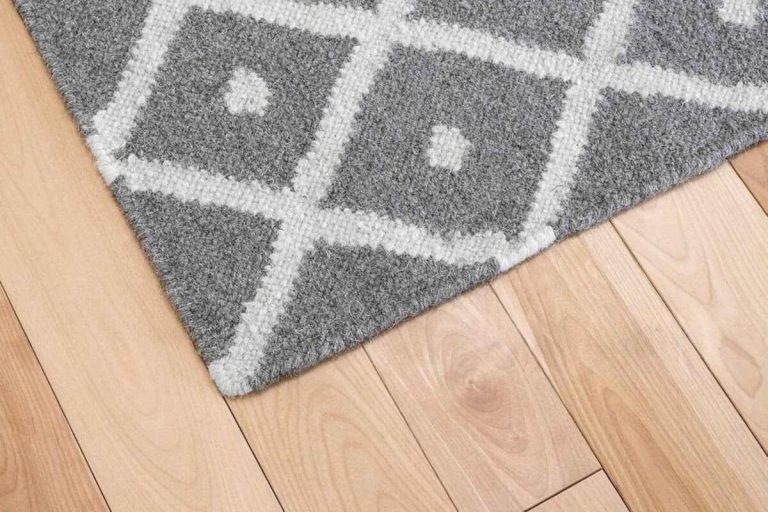
Thin lines between hardwood planks usually come from normal seasonal movement. During dry months, boards lose moisture, shrink across the width, and small gaps open. When indoor humidity rises again, many of those seams tighten.
Seasonal gaps tend to look consistent across a room and follow a repeatable cycle. Gaps tied to installation or structure behave differently. They often stay open year-round, worsen over time, or cluster near doorways and traffic lanes. Movement underfoot, bounce, hollow spots in glue-down floors, or visible tongue exposure also point away from “normal winter gapping.”
The practical rule is simple: if seams respond to indoor humidity and don’t trend worse, monitor and manage the swing. If gaps stay open, grow, or come with movement, treat it as a structural or installation issue–not a cosmetic one.
Seasonal Gaps: What’s Actually Happening to the Wood
Seasonal gapping is easier to deal with when you understand what the wood is doing. Hardwood isn’t “fixed” in place the way tile is. It’s always adjusting toward the moisture conditions in the home–basically trying to reach a balance point with the indoor air. When indoor relative humidity swings, the wood’s moisture content shifts with it. That’s the engine behind most winter gaps.
A lot of homeowners assume a gap means the floor is failing. Usually it’s just movement. The catch is expectations: if you expect seams to look identical 12 months a year, hardwood will disappoint you. If you expect it to move a little with the seasons, most floors make a lot more sense.
Why gaps show up in winter and fade in summer
Gapping is most common during heating season because warmed indoor air often runs dry. As the air dries, boards release moisture and shrink across the width. That’s when seams open and the floor can look “different.”
When indoor humidity rises again, boards take moisture back on and expand, so those seams tighten. Sometimes they don’t disappear completely, but they change. That change is the point.
Not every home follows the neat winter-open / summer-close story. Air conditioning can dehumidify the house in summer, and some homes run dry year-round. So gaps may stay visible longer even though the cause is still seasonal dryness. The better question is whether the seams respond when indoor humidity shifts.
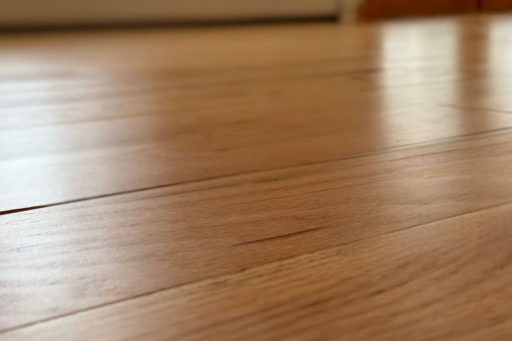
The humidity range that keeps floors stable
Most hardwood guidance–NWFA-style thinking about wood movement and the general acclimation guidance manufacturers put out—comes back to one thing: floors like consistency. There isn’t a single magic number that makes every floor perfect, but big swings almost always show up on the surface.
So think “moderate and steady.” If the home drops very dry during heating season and then swings hard later, you’ll see movement. If the home stays relatively stable, you’ll see less. That’s also why cosmetic fixes don’t hold when the cause is environmental.
What “normal” seasonal gaps look like
Normal seasonal gaps usually have a recognizable pattern:
- They’re broadly distributed, not confined to one tight spot.
- They’re fairly uniform in look, even if not perfectly identical.
- They change with conditions–they tighten when indoor humidity rises.
- They don’t keep escalating year after year.
- They look more dramatic in wide-plank floors, simply because a wider board shows more total change.
If you see that repeatable, non-worsening cycle, the right move is to manage the swing and monitor–not to “repair” seams that are doing what wood does.
Structural Gaps: The Red Flags Homeowners Miss
Seasonal gapping is about board width changing with moisture. Structural gapping is about losing control: boards shifting, subfloors flexing, fasteners loosening, or a glue bond failing. The visible line is the symptom. The bigger clue is that the floor behaves differently.
When it’s structural, it usually doesn’t self-correct with the seasons. The gap might stay put, slowly widen, or show up in specific zones. You get companion symptoms: bounce, soft spots, hollow areas, lifted edges, or seams that “move” underfoot.
Movement, flex, and subfloor issues
One clear red flag is deflection–that bounce or flex in a specific area. Subfloors that move under load can loosen attachment over time. Boards rub, seams widen, and the pattern stays localized. Doorways, hallways, and traffic lanes are common trouble spots.
If someone says, “I can feel the seam change when I step near it,” that’s not typical seasonal shrinkage. Seasonal movement changes the seam width, but it usually doesn’t create on-demand motion.
Moisture from below can also push a floor into structural-looking symptoms. A damp crawlspace or humid basement can drive moisture into the subfloor, distort boards, and stress fasteners or adhesive. Leaks can do the same. If gaps show up alongside cupping, lifted edges, buckling, or a sudden change in flatness, treat that as a serious clue.
Poor installation patterns
Persistent gaps often come back to installation and movement control–whether the floor was set up to move correctly.
Acclimation and moisture balance at install is a big one. Hardwood floor acclimation explains why that step matters so much. If boards went in too wet or too dry for how the home actually lives, seams can open more than expected. “It was perfect, then it gapped” is common. If it doesn’t recover, or it keeps widening year after year, install moisture is a real suspect.
Fastening matters too. Nail-down and staple–down floors need solid subfloor grip. If that hold isn’t there, boards can creep and gaps show up in stressed zones. Perimeter allowance is the one people miss. If the floor is pinched at the walls or transitions, expansion pressure forces shifting or buckling, and gaps can stay even after humidity returns.
Glue-down floors have their own failure: adhesive bond loss. When the bond lets go, boards can separate and stay separated–often with a hollow feel. That’s a bond issue, not a filler issue.
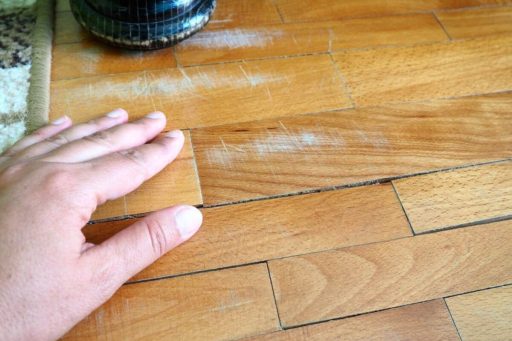
How to Tell Which One You Have
You don’t need a big tool setup to get to a solid conclusion. Start with pattern and stability.
Look at distribution first. Broad, fairly consistent gaps across a room usually point to humidity-driven movement. Localized gaps near a doorway, transition, or traffic lane lean structural.
Then track two or three seams for a few weeks with a quick note. If the seams tighten or loosen as indoor conditions shift, that leans seasonal. If they don’t change, or they creep wider, that leans structural.
Finally, pay attention to feel: bounce, soft spots, shifting, hollow areas, or visible tongue exposure move you out of “watch it” mode.
Quick Diagnostic Table (Pattern → Likely Cause → Seasonal vs Structural Call)
| What you notice | What it suggests | Call | Next move |
|---|---|---|---|
| Winter gaps, tighten later | RH-driven shrink/swell | Seasonal | Stabilize RH; monitor |
| Even gaps across room/level | Broad moisture movement | Seasonal (often) | Watch across seasons |
| Open year-round | Shift/bond loss/imbalance | Structural | Inspect before “fixing” |
| Widening year-to-year | Ongoing issue (dryness/loose/deflection) | Structural-leaning | Check RH + stability |
| Local gaps in doors/traffic | Deflection/fastening/transition stress | Structural-leaning | Check bounce; pro if worse |
| Bounce/soft spots | Subfloor deflection/weak hold | Structural | Subfloor/fastener check |
| Cupping/lift/buckle + gaps | Moisture imbalance or pinch | Structural/moisture | Find source; don’t fill |
| Hollow glue-down + gaps | Debonding | Structural | Bond eval; targeted repair |
| Bevel looks worse, still cycles | Normal movement exaggerated | Seasonal | Monitor; RH control |
What Not to Do (The Fixes That Backfire)
This is where the “quick fix” turns into a second problem. A gap shows up and the instinct is to fill it. But if the boards are still moving, anything rigid in that seam is going to crack, pop, or crumble.
Gap filling that backfires (putty/caulk) is the most common mistake–and yes, it looks good at first. Then humidity shifts, boards swell, and the filler can break apart or push up into ridges. It also traps dirt and turns seams into dark lines that look worse than the original gap.
Wetting the floor to “close gaps” is another common misstep. Heavier mopping, misting water, or running a damp towel along seams can swell boards unevenly, stress the finish, and trigger cupping or lifted edges.
And sanding doesn’t solve movement. Sanding or adding more finish can refresh appearance, but it doesn’t change how wood reacts to humidity swings. If the gaps are seasonal, they’ll still open and close. If the gaps are structural, refinishing won’t reattach boards, stiffen the subfloor, or restore a failed glue bond. If hardwood floor refinishing is on your mind, diagnose first.
Safe Fixes for Seasonal Gaps (Without Trapping Moisture)
If you’ve confirmed the gaps are seasonal, the best fix is simple: reduce the swing. Not eliminate it. Just reduce it.
Humidity control and consistency is the main lever. The goal is to avoid extreme dryness during heating season and avoid big spikes the rest of the year. A controlled humidifier can help in winter, but don’t chase a dramatic change. If you push humidity too hard, too fast, you can create swelling problems and end up with lifted edges or buckling. Building America’s guidance on managing indoor humidity and ventilation in cold weather supports the same idea: steady beats aggressive.
Sometimes “do nothing” is the correct answer. Floors that open slightly every winter and have done it for years without worsening are usually better managed than forced into closure.
There are also low-risk habits that help when seams are open:
- Keep grit down so edges don’t get abraded when boards are slightly separated. Hardwood floor cleaning basics covers the essentials.
- Use entry mats and felt pads so traffic lanes don’t grind debris into open seams.
- Avoid moisture extremes–no heavy wet mopping, and don’t leave spills sitting along seams.
If squeaks show up along with seasonal gaps, don’t assume the floor is failing. Some floors squeak more when they’re dry because boards and subfloors rub more. If it’s minor and seasonal, it can be a side effect. If squeaks come with bounce, shifting, or widening seams, that’s when it becomes a different diagnosis.
When Repairs Make Sense (And When It’s Time to Call a Pro)
Repairs make sense when the gaps stop acting seasonal and start acting permanent or progressive. If the seams stay open year-round, keep widening over time, or show up with movement underfoot, humidity control alone usually isn’t the answer.
Structural repair territory includes persistent year-round gaps, progressive widening gaps, visible tongue-and-groove damage, boards that shift, soft spots, and clear subfloor deflection. Those conditions typically need mechanical correction.
What that looks like depends on the failure mode:
- In a fastened floor, localized looseness may call for re-fastening to restore holding power and stop board migration.
- If boards are cracked, split, or the tongue-and-groove is broken, board replacement is often the clean fix because the joint can’t reliably hold alignment anymore.
- If the floor feels bouncy or soft, subfloor repair or stiffening is usually part of the solution, otherwise symptoms tend to return.
- In glue-down floors with hollow spots and persistent separation, bond evaluation and targeted rebonding is the lane.
Moisture-driven structural symptoms deserve extra caution. If gaps show up with cupping, lifted edges, or buckling, the smartest move is finding the moisture driver first–basement/crawlspace conditions, leaks, or perimeter pinch. In those cases, drawing moisture out of wood floors may be relevant, but only after you’ve identified where the moisture is coming from.
If you can’t clearly identify the failure mode, an inspection is usually cheaper than guessing. A common mistake is spending money on seam-focused fixes when the problem is underneath or system-level.
Quick Recap: Diagnose First, Then Pick the Fix
If the gaps show up during dry months, ease up when indoor humidity rises, and look fairly consistent across the room, the pattern usually points to seasonal movement. In that case, focus on humidity consistency, simple monitoring, and low-risk habits that protect edges while seams are open.
If the gaps stay open year-round, worsen over time, cluster in specific areas, or come with bounce, shifting, hollow spots, or visible joint damage, treat it as structural or installation-related. That’s when re-fastening, board replacement, subfloor work, or bond repair becomes the real solution.
One rule that prevents repeat work: don’t fill gaps before you stabilize the cause. If the floor is still moving, filler will fail, and it usually has to be cleaned out before the real repair happens.