The cost depends mostly on square footage, floor condition, stain change, repairs, stairs, and whether the job needs a full sand and refinish or just a screen and recoat. On this page, our pricing starts at $2 per sq.ft. for buff and coat style work and $4.50 per sq.ft. for full sand and refinish. The only way to price it correctly is with an in-home estimate, especially when there is water damage, pet staining, or board replacement.
Many standard projects can fit a 1-day refinishing option, especially when the scope is straightforward and the floor does not need heavy repair work. Larger homes, stairs, stain changes, and more complex finish systems can extend the job. We also give clear guidance on walk-on time, furniture return, and full cure time.
Yes, but humidity matters. In the Tampa Bay Area, indoor conditions, airflow, and moisture levels can affect sanding, stain behavior, dry time, and final finish performance. That is why we check the floor first and choose the right process instead of treating every job the same.
Full refinishing sands off the old finish and a thin layer of wood, then rebuilds the floor with stain if needed and new finish coats. Screen-and-recoat, also called buff and coat, abrades the existing finish and adds fresh coats without sanding to bare wood. If the floor has grey wear, deep scratches, black stains, or you want a color change, full refinishing is usually the better fit.
Sometimes, yes. It depends on the wear layer thickness and whether the floor has been sanded before. We confirm that during the estimate before recommending engineered hardwood refinishing.
Sometimes a floor can be refreshed without a full sand-down, but that is not the same as true hardwood floor refinishing. If the wood is in good shape and the finish is only dull or lightly scratched, a screen and recoat may be enough. If the damage goes deeper, sanding is usually what gives you a clean and consistent result.
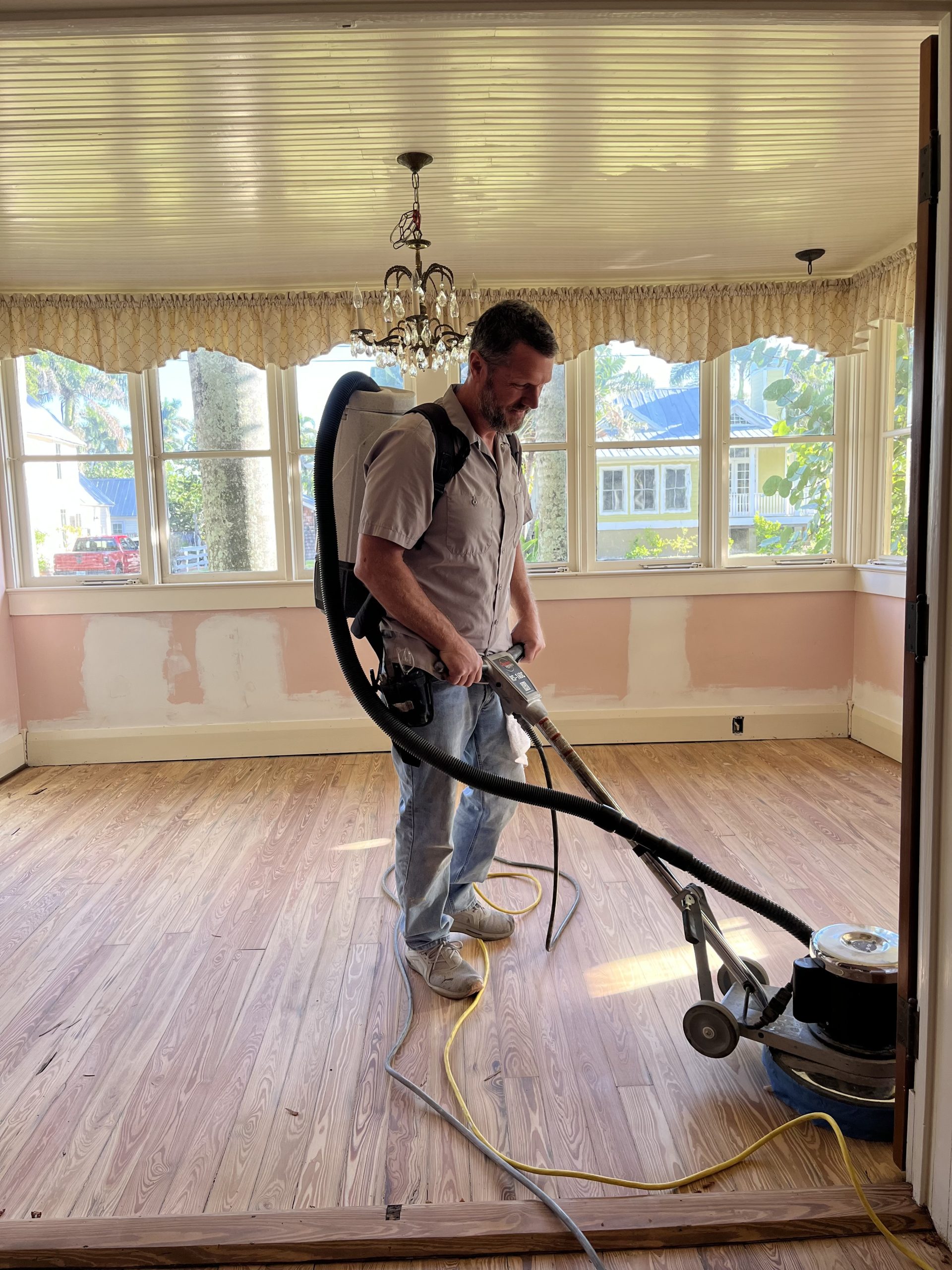
No refinishing process is literally zero-dust, but a good crew can keep dust much lower with proper containment and dust-controlled sanding. We use HEPA-supported cleanup and site protection so the job stays cleaner and more manageable. You should still expect some fine dust, just not the kind of mess people associate with older sanding methods.
That depends on the look you want, your traffic level, and how sensitive you are to dry time and odor. Water-based polyurethane is a common choice because it dries faster, stays clearer, and works well for lighter or more modern-looking floors. Oil-based polyurethane gives a warmer tone and classic look, but it usually has a longer dry time and stronger odor during application.
Sometimes they can be improved a lot, but not every stain sands out fully. Some pet stains and dark moisture marks go deeper than the finish layer and may require spot board replacement or localized repair. We check that during the in-home estimate and recommend the option that will look most consistent from normal standing height.
Even stain starts with even sanding. We use a proper grit sequence and prep steps to reduce blotchiness, edge contrast, and visible sanding marks. If you want a stain color change, we can also do in-home sampling before the full job.
That depends on the finish system, temperature, and humidity inside the home. We tell you exactly when light foot traffic is okay, when furniture can go back, and when rugs are safe. Full cure takes longer than “dry to the touch,” and that is when the finish reaches its real durability.
Yes. Stairs usually need more detailed hand work around edges, corners, risers, and nosings than flat floors do. We quote them separately when needed so the scope stays clear.
The biggest cost factors are square footage, damage level, stain change, stairs, repairs, board replacement, and whether the floor is site-finished, prefinished, or engineered hardwood. Floors with pet stains, moisture issues, or finish contamination may also need more prep. That is why the in-home estimate matters more than any flat online number.